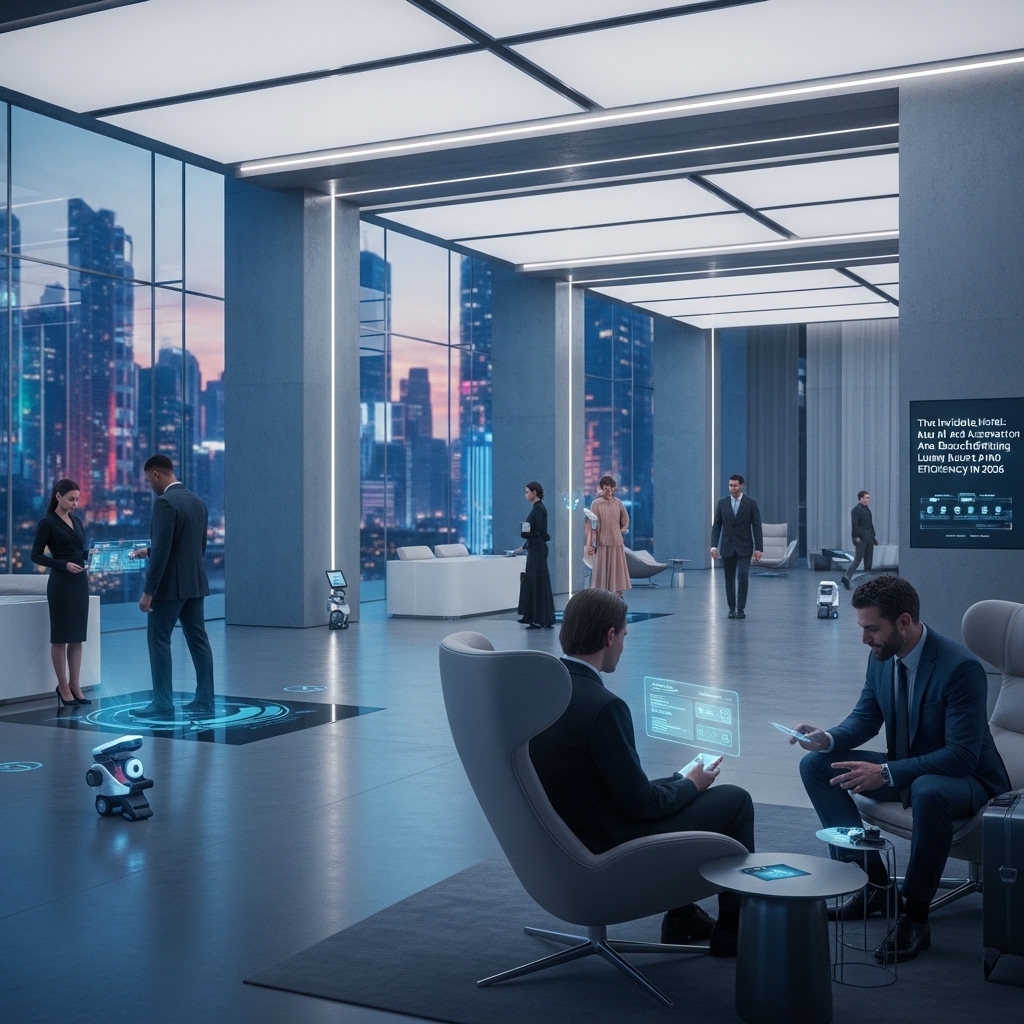
Welcome to 2026. The hospitality landscape has fundamentally shifted. Just five years ago, Artificial Intelligence was a buzzword. Today, it is the operational standard for high-performing hotels. The gap between hotels running automated ecosystems and those relying on manual processes is now impossible to ignore.
The concept of the “Invisible Hotel” is not about removing the human touch — it is about removing friction. By automating repetitive tasks, hotels free their teams to focus on meaningful guest interactions. At Revenue First, we help hotels transition into AI-powered ecosystems that scale service, reduce cost, and increase revenue.
1. The Contactless Guest Journey
In 2026, the front desk is optional. Many guests prefer a seamless, app-driven arrival experience — mobile check-in, digital ID verification, and smartphone room access.
Contactless check-ins and mobile key systems integrate directly with your hotel PMS, automating arrivals while maintaining data accuracy. This reduces labor costs and allows staff to act as true hosts, not paperwork processors.
2. AI Chatbots: The 24/7 Super-Concierge
Guests expect instant responses — even at 2:00 AM. Routine questions left unanswered damage satisfaction and reviews.
AI-powered chatbots handle the majority of guest queries via WhatsApp, website chat, and hotel apps. When connected to your booking engine, these bots can upsell dining reservations, late checkouts, and paid experiences automatically — turning support into revenue.
3. Predictive Maintenance: Fixing Problems Before They Happen
Reactive maintenance leads to poor reviews and compensation costs. In 2026, IoT-driven predictive maintenance prevents failures before guests ever notice.
Smart sensors monitor HVAC, power usage, and network stability. These systems integrate with operational dashboards and your core property systems to trigger maintenance proactively — preserving guest comfort and brand reputation.
4. Hyper-Personalization Through Data
Modern hospitality is built on remembering preferences, not just names.
By consolidating guest data across your channel manager, PMS, and on-property systems, AI creates detailed guest profiles. This enables automated upgrade offers, personalized amenities, and tailored experiences that increase repeat bookings and loyalty.
5. Dynamic Staffing & Workforce Optimization
Labor is the single largest operating expense for hotels. AI-driven workforce tools forecast occupancy using real-time demand signals.
Accurate forecasting enables smart scheduling — preventing overstaffing during slow periods and understaffing during peaks. When aligned with hotel digital marketing, staffing becomes proactive instead of reactive
6. AI-Powered Revenue Decisions in Real Time
Automation is most powerful when it connects operations and revenue.
In advanced hotel ecosystems, AI continuously analyzes:
-
Booking velocity
-
Cancellation probability
-
Channel acquisition cost
-
Guest spend patterns
This allows systems to recommend — or automatically execute — rate changes, inventory restrictions, and upsell offers. Revenue management becomes anticipatory, not reactive, ensuring hotels capture value before demand peaks or softens.
7. Voice AI & Multilingual Guest Support
Global travel has fully rebounded, and language barriers are once again a friction point.
Voice AI and multilingual chat systems now support:
-
Real-time translation
-
Voice-based room service requests
-
Local recommendations in the guest’s native language
This level of accessibility enhances guest comfort while reducing pressure on front-office teams — especially in internationally driven destinations.
8. Smart Energy Management & Sustainability Automation
Sustainability is no longer just a brand statement — it is a cost-control strategy.
AI-driven energy systems automatically:
-
Adjust climate control based on occupancy
-
Reduce power usage in vacant rooms
-
Optimize lighting and water consumption
The result is lower utility costs, reduced carbon footprint, and improved ESG positioning — all without compromising guest comfort.
9. Exception-Based Management: Humans Where They Matter Most
The Invisible Hotel does not eliminate staff — it elevates them.
By automating routine workflows, teams are alerted only when human judgment is required:
-
VIP arrivals
-
Service recovery situations
-
Upsell opportunities
-
Loyalty recognition moments
This model improves service quality while reducing burnout and operational chaos.
10. Data Security & Ethical AI Governance
With increased automation comes increased responsibility.
Modern hotel AI ecosystems prioritize:
-
Data privacy compliance
-
Secure guest identity management
-
Transparent AI decision logic
-
Human override controls
Trust is the foundation of automation adoption. When guests feel safe, they engage more deeply with digital experiences.
Conclusion: Automation That Feels Human
The Invisible Hotel is not cold or robotic — it is efficient, responsive, and deeply personal. Automation removes friction so hospitality can shine.
At Revenue First, we design intelligent hotel ecosystems that combine AI, automation, and human service. If you’re ready to future-proof your operations and revenue, connect with our experts and step confidently into 2026.