In the luxury and boutique hospitality sectors, the old adage “don’t judge a book by its cover” simply does not apply. In the digital age, your “cover” is your website — and guests judge it ruthlessly. Research shows travelers form an opinion within 0.05 seconds of your homepage loading. If that first impression feels outdated or cluttered, revenue is lost instantly.
As we close out 2025, the link between premium visual presentation and higher Average Daily Rate (ADR) is undeniable. Guests are willing to pay more for properties that look premium online. At Revenue First, we treat website design and visual presentation as revenue assets. This deep dive explores how design psychology and user experience directly impact bookings.
1. The Science of First Impressions: Visual Storytelling
Humans process visuals far faster than text. When a guest lands on your website, they are not searching for amenities — they are searching for a feeling. They want to imagine themselves inside the experience.
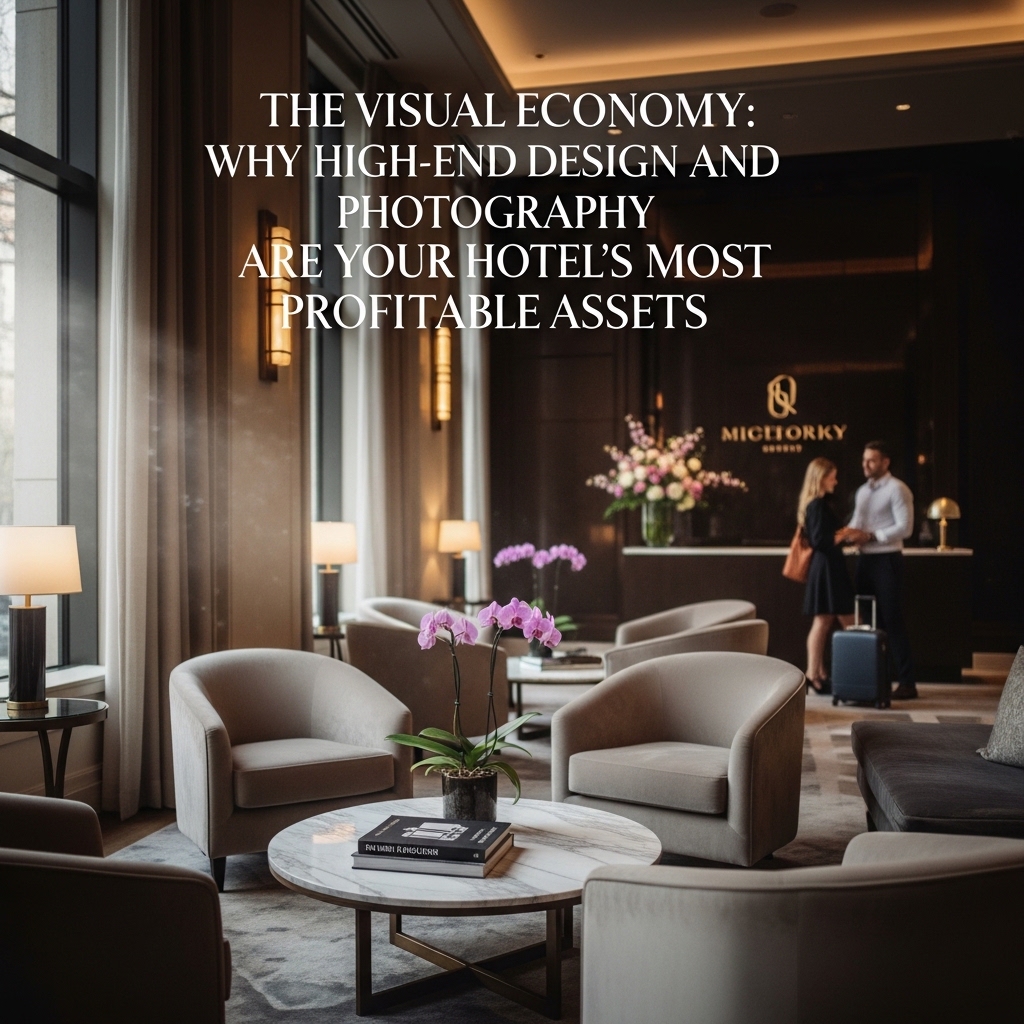
Professional architectural visuals create that emotional connection. Poor-quality images make spaces look smaller and cheaper, while expertly shot photography highlights light, texture, and scale. These visuals set expectations that justify premium pricing and longer stays.
2. User Experience (UX): Your Silent Digital Concierge
Stunning visuals mean nothing if the website experience is confusing. Modern hotel websites must function like a digital concierge — intuitive, fast, and frictionless.
A high-performing hotel website design focuses on:
- Minimalist Navigation: Clear menus that prioritize Rooms, Offers, and Book Now actions.
- Visual Hierarchy: Strategic use of size, contrast, and spacing to guide user attention.
- Scrollytelling: Immersive layouts that blend visuals, motion, and storytelling to maintain engagement.
3. Mobile Responsiveness: A Non-Negotiable Standard
Google indexes mobile-first. If your website fails on mobile, your visibility — and bookings — suffer.
More importantly, travelers discover hotels through social media. When a user clicks from Instagram or Google Maps, the mobile experience must feel seamless and premium. Our mobile-first layouts integrate effortlessly with your direct booking engine, ensuring every scroll leads closer to conversion.
4. Speed vs. Quality: Achieving Both
High-resolution imagery can slow websites if not optimized correctly. Slow load times increase bounce rates and kill conversions.
We balance beauty with performance using image compression, next-generation formats, and global delivery infrastructure. This ensures visually rich pages load instantly — even on mobile networks — supporting both SEO and user satisfaction.
5. Conclusion: Your Digital Curb Appeal
Your website is the only sales channel where you retain 100% of your revenue. It should represent your brand at its absolute best. When premium design and visual storytelling work together, hotels gain pricing power and stronger direct bookings.
At Revenue First, we build digital ecosystems that combine aesthetics, performance, and conversion strategy. If you’re ready to elevate your brand perception and revenue, connect with our team and transform your website into a true revenue engine.
6. Design That Signals Price Before You Show It
Luxury guests decide whether a hotel is “worth the price” before they ever see the rate.
Design elements that subconsciously justify higher ADR include:
-
Generous white space that signals calm and exclusivity
-
Serif or custom typography that conveys heritage and sophistication
-
Muted, cohesive color palettes over loud promotional colors
-
Slow, deliberate animations instead of flashy effects
When design communicates confidence and restraint, guests accept premium pricing with less resistance. This is why luxury hotels rarely “sell” — they present.
7. Content Architecture: Reducing Cognitive Load
Luxury guests value effortlessness. If they have to think too hard, they leave.
High-converting hotel websites are structured to:
-
Answer one question per section
-
Avoid overwhelming blocks of text
-
Replace feature lists with benefit-driven storytelling
-
Use visual cues instead of instructions
For example, instead of listing amenities, effective pages show how the guest will feel using them. This reduces cognitive load and increases emotional buy-in.
8. Micro-Interactions That Build Trust
Trust is built in small moments.
Micro-interactions such as:
-
Subtle hover effects on buttons
-
Smooth transitions between sections
-
Instant feedback on form inputs
-
Clear progress indicators during booking
These details signal professionalism and reliability. Guests may not consciously notice them, but they feel the difference — and that feeling influences booking decisions.
9. Integrating Design With Direct Booking Strategy
A beautiful website that doesn’t convert is an expensive brochure.
Design must work in harmony with:
-
Your booking engine placement
-
Rate visibility and clarity
-
Offer presentation
-
Urgency cues during high demand
We strategically integrate “Book Now” actions within the storytelling flow — not as interruptions, but as natural next steps. This approach increases direct bookings without aggressive sales tactics.
10. Brand Consistency Across the Digital Journey
Your website is only one touchpoint.
Luxury perception collapses when:
-
The website looks premium, but the booking engine feels generic
-
Social media visuals don’t match the website tone
-
Email confirmations feel transactional instead of branded
True digital luxury requires consistency across every guest interaction — from the first homepage visit to the booking confirmation email.
Conclusion: Design Is Revenue Strategy
In luxury hospitality, design is not decoration.
It is positioning.
It is pricing power.
It is trust.
Hotels with outdated or inconsistent digital presentation are forced to compete on price. Hotels with refined, intentional design compete on desire.
At Revenue First, website design is never treated as an isolated project. It is engineered as part of a complete revenue ecosystem — aligned with branding, performance, booking technology, and marketing strategy.